Here's something most business owners don't realize yet: people aren't just Googling anymore. They're asking ChatGPT. They're talking to Perplexity. They're using AI search tools that don't show ten blue links : they give one answer.
And if your business isn't that answer? You're invisible.
This isn't some far-off future scenario. It's happening right now. AI-powered search is changing how people discover businesses, and the old playbook : rank for keywords, get clicks, win traffic : doesn't work the same way anymore.
The good news? You don't need to be a tech genius to adapt. You just need to understand what's changed and what to do about it.
What's Actually Different About AI Search
Traditional Google search shows you a list of options. You click through websites, compare, and decide.
AI search gives you the answer : often without you clicking anything at all. It synthesizes information from multiple sources and presents a recommendation or summary directly in the response.

When someone asks an AI tool "Who should I hire for web design in Austin?" or "What's the best CRM for small businesses?" : that AI is making a choice. It's recommending businesses based on what it finds credible, trustworthy, and relevant.
Here's the shift: AI doesn't rank websites. It recommends businesses.
That changes everything about how you show up online.
Why Your Old SEO Strategy Isn't Enough Anymore
Most businesses built their online presence around Google's ranking factors: keywords in the right places, backlinks, page speed, mobile-friendliness. Those things still matter : but they're no longer the whole game.
AI systems don't crawl your site looking for keyword density. They're evaluating trust signals and credibility markers across the entire internet.
Think of it this way: Google asks, "Does this page match the search query?" AI asks, "Should I trust this business enough to recommend it?"
That's a fundamentally different question : and it requires a different approach.
What AI Looks for When Recommending Your Business
AI systems evaluate businesses based on factors often grouped under the acronym EEAT: Expertise, Experience, Authoritativeness, and Trustworthiness.
Here's what that actually means in plain terms:
Expertise : Can you demonstrate that you know what you're talking about? Do you have credentials, case studies, or clear proof of your skills?
Experience : Have you actually done the work? Real examples, real results, and first-hand knowledge matter more than generic content.
Authoritativeness : Are other credible sources citing you, mentioning you, or linking to you? Do you show up in conversations as a go-to resource?
Trustworthiness : Do you have reviews, testimonials, transparent information, and a consistent presence? Can AI verify that you're legitimate?

These aren't abstract concepts. They're the building blocks of how AI decides whether to recommend your business or someone else's.
Where AI Pulls Its Recommendations From
Here's what catches business owners off guard: AI doesn't just look at your website. It pulls information from everywhere:
- Your Google Business Profile
- Review sites (Yelp, Google Reviews, industry-specific platforms)
- Social media (LinkedIn, Instagram, TikTok, Facebook)
- Industry directories and listings
- News mentions and press coverage
- Podcast appearances or interviews
- Guest articles or contributions
- Third-party mentions on credible sites
If your business information is inconsistent, outdated, or hard to find across these platforms, AI won't confidently recommend you : even if your website is perfect.
5 Practical Steps to Stay Visible in AI Search
You don't need to overhaul everything overnight. Start with these five moves that make the biggest difference:
1. Make Your Expertise Obvious and Verifiable
AI systems need to understand who you are and what you're good at : quickly.
What to do:
- Add clear "About" pages with credentials, certifications, and team bios
- Publish case studies that show real results (even simple before-and-afters work)
- Include author bylines on blog posts with brief credentials
- List awards, partnerships, or professional memberships
The goal isn't bragging. It's making it easy for AI to verify that you're credible.
2. Build Consistent Business Information Everywhere
AI cross-references information. If your business name, address, phone number, or hours vary across platforms, that creates confusion : and confusion kills recommendations.
What to do:
- Audit where your business is listed (Google, Yelp, Facebook, LinkedIn, industry directories)
- Make sure your NAP (name, address, phone) is identical everywhere
- Update outdated profiles and claim unclaimed listings
- Add descriptions that clearly explain what you do and who you serve
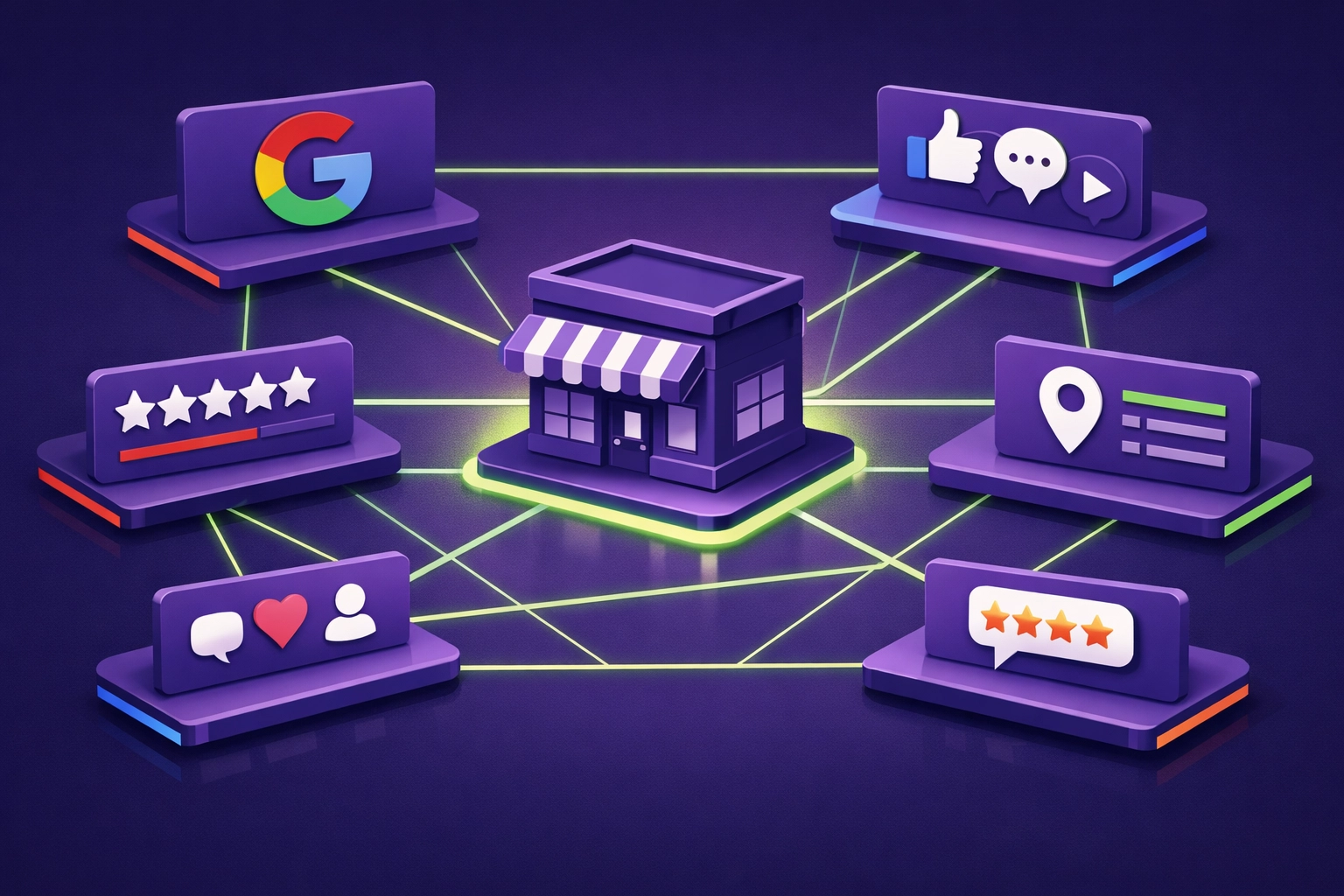
Think of this as building a consistent story that AI can easily understand and repeat.
3. Show Up Where Your Customers Already Are
Younger buyers don't start on Google anymore : they're searching on TikTok, asking questions on Reddit, or browsing Instagram. AI tools are pulling recommendations from these platforms too.
What to do:
- Create a presence on 2–3 platforms where your target customers spend time
- Share helpful content (tips, behind-the-scenes, quick wins) consistently
- Engage authentically : answer questions, comment, be part of the conversation
- Use platform-specific features (Instagram Stories, LinkedIn articles, TikTok videos)
You don't need to be everywhere. Just be visible and credible where it counts.
4. Collect and Showcase Real Reviews
Reviews aren't just for reputation management anymore : they're training data for AI. The more positive, specific reviews you have, the more confident AI becomes in recommending you.
What to do:
- Make it easy for happy customers to leave reviews (send links, follow up post-project)
- Respond to all reviews (good and bad) professionally and thoughtfully
- Feature testimonials on your website with names and context
- Encourage detailed reviews that mention specific services or outcomes
Quantity matters, but quality and specificity matter more.
5. Create Content That Answers Real Questions
AI loves content that directly answers questions people are actually asking. Stop writing for search engines and start writing for real humans with real problems.
What to do:
- Identify the top 10 questions your customers ask before buying
- Write clear, helpful content that answers each one (blog posts, FAQs, videos)
- Use natural language : write like you're explaining it to a friend
- Include examples, step-by-step guidance, or simple frameworks
The best content for AI search is content that would genuinely help someone make a decision.
What This Looks Like in Practice
Let's say you run a landscaping business. In the old world, you'd optimize for "landscaping services near me" and hope to rank in the local pack.
In the AI world, someone asks ChatGPT: "Who should I hire for backyard landscaping in Denver?"
AI scans the web and finds:
- Your Google Business Profile with 50+ five-star reviews
- Your Instagram with before-and-after project photos
- A blog post you wrote explaining how to choose a landscaping contractor
- Mentions of your business in local news or community forums
- Consistent contact info across all platforms
Based on that, AI confidently recommends you by name.
That's the shift. It's not about ranking #1 on a search results page. It's about being the business AI trusts enough to recommend directly.

The Bottom Line
AI isn't replacing search : it's changing what visibility means.
The businesses that will thrive in this new environment aren't the ones gaming algorithms. They're the ones building real credibility, showing up consistently, and making it easy for AI to understand who they are and what they do.
You don't need a massive marketing budget or a tech team. You just need to be intentional about how you show up online : across all the places that matter.
Start with one or two of the steps above. Audit your business information. Ask for reviews. Create one piece of helpful content. Small moves compound into real visibility.
Ready to future-proof your online presence? Let's talk about how Brandit360 can help you stay visible as search evolves. Reach out here.